
Forschungsschwerpunkte
In der Gruppe der atmosphärischen Umweltanalytik konzentrieren wir uns auf die chemische Charakterisierung von Umweltproben wie Feinstaub, Niederschlagsproben und Eisbohrkernen. Anhand dieser Proben untersuchen wir die Quellen, die atmosphärischen Bildungswege, die Senken, und die historischen Trends sekundärer organischer und anorganischer Aerosole.
- Aerosolbelastung in der zukünftigen Atmosphäre (ALFA)
- Quantifizierungsansätze in der ESI
- Organische Aerosol-Tracer in Eisbohrkernen
- Aerosole und Gesundheit
- Ultrafeine Partikel aus der Luftfahrt
- Charakterisierung von PM in Großstädten
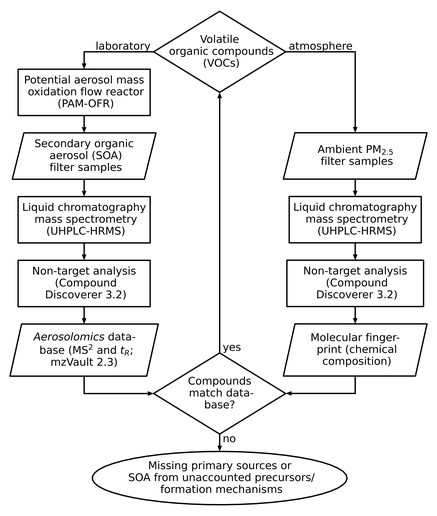
Zitierweise: Thoma, M., Bachmeier, F., Gottwald, F. L., Simon, M., and Vogel, A. L.: Mass spectrometry-based aerosolomics: a new approach to resolve sources, composition, and partitioning of secondary organic aerosol, Atmos. Meas. Tech. Discuss. [preprint], https://doi.org/10.5194/amt-2022-221, in review, 2022.
Kontakt: Prof. Dr. Alexander Vogel, Aerosolomics@dlist.server.uni-frankfurt.de
Bitte klicken Sie auf den untenstehenden Link, um die aeroslomics-Datenbank als db-Datei, csv-Datei oder msp-Datei herunterzuladen.Instrumente und Methoden
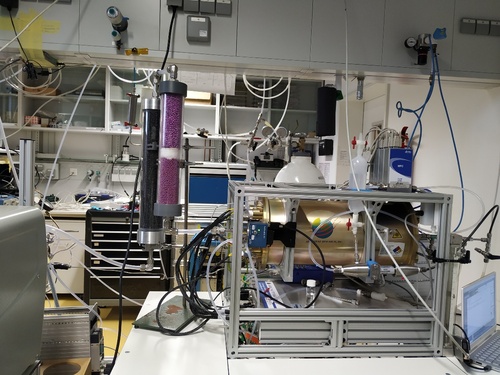
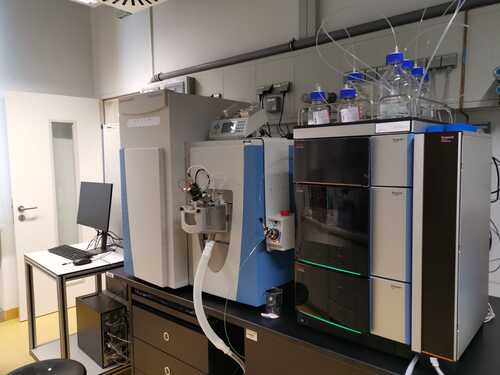
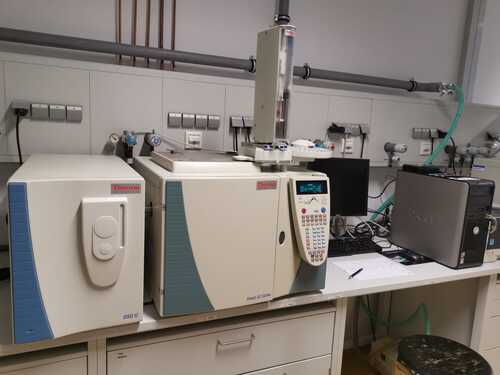
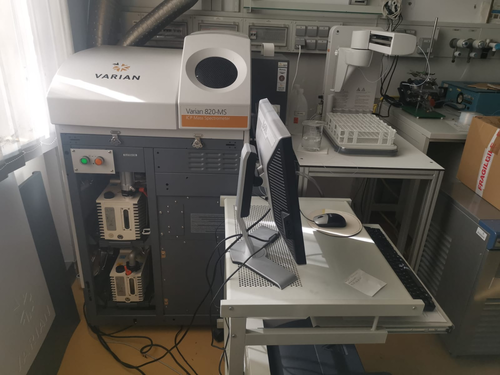
Wir entwickeln neue Analysestrategien für die Flüssigkeitschromatographie / ultrahochauflösende Massenspektrometrie, wie z.B. non-target-Analysen und Data-Mining-Techniken, um die wesentlichen Informationen aus den Massenspektrometriedaten zu extrahieren. Die Entwicklung der automatisierten Erstellung von molekularen Fingerabdrücken aus Aerosolfilterproben und in-situ-Massenspektrometrie von Transformationsprozessen wird unser Verständnis über atmosphärischem Feinstaub in unserer Umwelt verbessern.
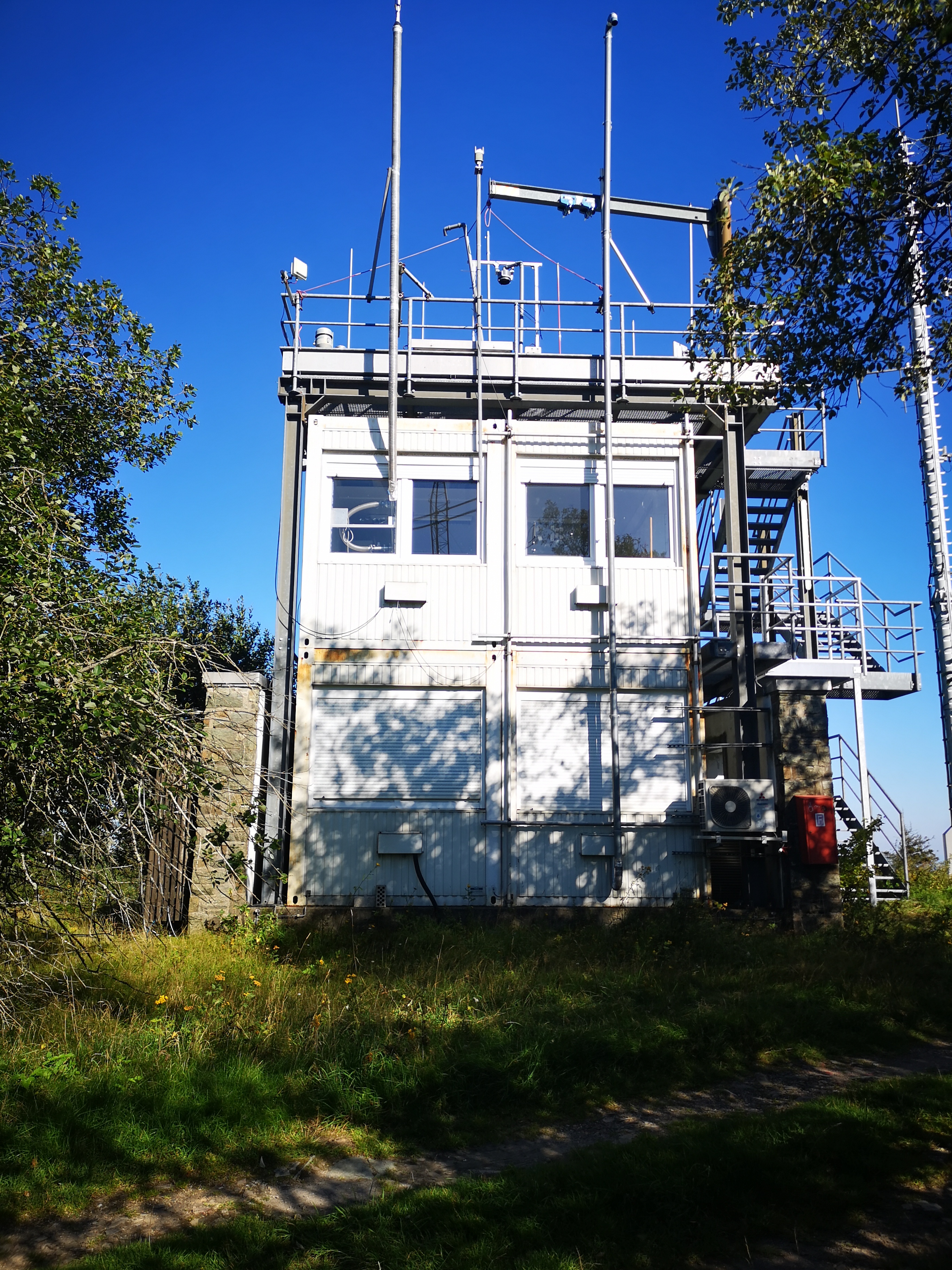
Auf dem Taunus-Observatorium finden zahlreiche Forschungsexperimente statt.
Mitarbeitende

Foto: Uwe Dettmar
AG-Leitung
 Prof. Dr. Alexander Vogel
Institut für Atmosphäre und Umwelt
Goethe Universität Frankfurt am Main
Altenhöferallee 1
60438 Frankfurt am Main
Raum: 3.225
Tel.: +49-(0)69-798-40225
E-Mail:
vogel@iau.uni-frankfurt.de
ORCID: 0000-0002-1293-6370
Wissenschaftliche Mitarbeitende
| Name | Raum / room | Telefon / phone number +49-(0)69-798- | E-Mail name@iau.uni-frankfurt.de |
| Vogel, Prof. Dr. Alexander | 3.225 | 40225 | vogel |
| Ahmad, Muhammad Nasrullah | 3.222 | 40228 | ahmad |
| Breuninger, Anna | 3.224 | 40230 | breuninger |
| David, Julia | 3.224 | 40230 | david |
| Simon, Dr. Mario | 3.226 | 40232 | simon |
| Ungeheuer, Dr. Florian | 3.222 | 40228 | ungeheuer |
- Dr. Jialiang Ma (Doktorand)
- Dr. Luca D'Angelo (Post-Doc)
- Franziska Saur (M.Sc. Umweltwissenschaften)
- Jana Englert (M.Sc. Umweltwissenschaften)
- Franziska Bachmeier (Wissenschaftliche Mitarbeiterin)
- Felix Gottwald
- Jonas Wallraff (Master Student)
- Iris Tuchscherer (Master Studentin)
- Konstantin Dörholt (Wissenschaftlicher Mitarbeiter)
- Franziska Bohr (Master Studentin)
- Dominik Kuchler (Master Student)
- Nazmiye Cakir (Master Studentin)
- Clara Löw (Master Studentin)
- Anja Lauer (Wissenschaftliche Mitarbeiterin)
Aktuelle Stellenangebote
Es werden regelmäßig Stellen für studentische und wissenschaftliche Hilfskräfte besetzt. Bei Interesse melden Sie sich bei Prof. Vogel.
Publikationen
- Breuninger, Anna et al. (2025) Organic aerosols mixing across the tropopause and its implication for anthropogenic pollution of the UTLS. Atmos. Chem. Phys.. 25
- Seymore, Jackson et al. (2025) Retention during freezing of raindrops – Part 2: Investigation of ambient organics from Beijing urban aerosol samples. Atmos. Chem. Phys.. 25
- David, Julia et al. (2025) Real-time organic aerosol characterization via Orbitrap mass spectrometry in urban and agricultural environments. Atmos. Meas. Tech.. 18
- Bozem, Heiko et al. (2025) The TropoPause Composition TOwed Sensor Shuttle (TPC-TOSS): A new airborne dual platform approach for atmospheric composition measurements at the tropopause
- Wollenweber, Marc et al. (2025) Aquatic ecosystems as a final receptor of atmospheric organic particulate-bound pollutants: a plea for the integration of aquatic ecotoxicology into the risk assessment of air pollution. Environ Sci Eur. 37
- Thoma, Markus et al. (2025) Seasonal analysis of organic aerosol composition resolves anthropogenic and biogenic sources at a rural background station in central Europe. Environ. Sci.: Atmos.
- Ma, Jialiang et al. (2025) Unveiling a large fraction of hidden organosulfates in ambient organic aerosol. Nat Commun. 16
- Joppe, Philipp et al. (2025) Transport of Biomass Burning Aerosol into the Extratropical Tropopause Region over Europe via Warm Conveyor Belt Uplift
- Burgay, François et al. (2025) Nontarget screening of a Siberian ice core reveals changes in the pre-industrial to industrial organic aerosol composition. Sci. Adv.. 11
- Tang, Rongzhi et al. (2025) Enhanced sulfate formation in mixed biomass burning and sea-salt interactions mediated by photosensitization: effects of chloride, nitrogen-containing compounds, and atmospheric aging. Atmos. Chem. Phys.. 25
- Borchers, Christine et al. (2024) Retention of α -pinene oxidation products and nitro-aromatic compounds during riming. Atmos. Chem. Phys.. 24
- Decker, Zachary C. J. et al. (2024) Emission and Formation of Aircraft Engine Oil Ultrafine Particles. ACS EST Air. 1
- Dada, Lubna et al. (2023) Role of sesquiterpenes in biogenic new particle formation. Science advances. 9
- Burgay, François et al. (2023) Hybrid Targeted/Untargeted Screening Method for the Determination of Wildfire and Water-Soluble Organic Tracers in Ice Cores and Snow. Analytical chemistry. 95
- Nie, Wei et al. (2023) NO at low concentration can enhance the formation of highly oxygenated biogenic molecules in the atmosphere. Nature communications. 14
- Tang, Rongzhi et al. (2023) Sulfate Formation by Photosensitization in Mixed Incense Burning-Sodium Chloride Particles: Effects of RH, Light Intensity, and Aerosol Aging. Environmental science & technology. 57
- Caudillo, Lucía et al. (2023) An intercomparison study of four different techniques for measuring the chemical composition of nanoparticles. Atmospheric Chemistry and Physics. 23
- Muñoz-Vega, Edinsson et al. (2023) Role of Soil Biofilms in Clogging and Fate of Pharmaceuticals: A Laboratory-Scale Column Experiment. Environmental science & technology. 57
- Ma, Jialiang et al. (2022) Nontarget Screening Exhibits a Seasonal Cycle of PM2.5 Organic Aerosol Composition in Beijing. Environmental Science & Technology. 56
- Karges, Ursula et al. (2022) Implementation of initial emission mitigation measures for 1,4-dioxane in Germany: Are they taking effect?. Science of The Total Environment. 806
- Wallraff, Jonas P. et al. (2022) Occurrence and in vitro toxicity of organic compounds in urban background PM2.5. Science of The Total Environment. 817
- Ungeheuer, Florian et al. (2022) Nucleation of jet engine oil vapours is a large source of aviation-related ultrafine particles. Communications Earth & Environment. 3
- Thoma, Markus et al. (2022) Mass spectrometry-based Aerosolomics: a new approach to resolve sources, composition, and partitioning of secondary organic aerosol. Atmospheric Measurement Techniques. 15
- Ungeheuer, Florian et al. (2021) Identification and source attribution of organic compounds in ultrafine particles near Frankfurt International Airport. Atmospheric Chemistry and Physics. 21
- Tomaz, Sophie et al. (2021) Structures and reactivity of peroxy radicals and dimeric products revealed by online tandem mass spectrometry. Nature communications. 12
- Yan, C. et al. (2020) Size-dependent influence of NOx on the growth rates of organic aerosol particles. Science advances. 6
- Simon, Mario et al. (2020) Molecular understanding of new-particle formation from \textgreeka-pinene between -50 and +25 °C. Atmospheric Chemistry and Physics. 20
- Wang, Mingyi et al. (2020) Photo-oxidation of Aromatic Hydrocarbons Produces Low-Volatility Organic Compounds. Environmental Science & Technology. 54
- Heinritzi, Martin et al. (2020) Molecular understanding of the suppression of new-particle formation by isoprene. Atmospheric Chemistry and Physics. 20
- Qi, Lu et al. (2020) A 1-year characterization of organic aerosol composition and sources using an extractive electrospray ionization time-of-flight mass spectrometer (EESI-TOF) Atmospheric Chemistry and Physics. 20
- Hartmann, M. et al. (2019) Variation of Ice Nucleating Particles in the European Arctic Over the Last Centuries. Geophysical Research Letters. 46
- Daellenbach, K. R. et al. (2019) Impact of anthropogenic and biogenic sources on the seasonal variation in the molecular composition of urban organic aerosols: a field and laboratory study using ultra-high-resolution mass spectrometry. Atmospheric Chemistry and Physics. 19
- Ye, Qing et al. (2019) Molecular Composition and Volatility of Nucleated Particles from \textgreeka-Pinene Oxidation between -50 °C and +25 °C. Environmental Science & Technology. 53
- Vogel, Alexander L. et al. (2019) A Comprehensive Nontarget Analysis for the Molecular Reconstruction of Organic Aerosol Composition from Glacier Ice Cores. Environmental Science & Technology. 53
- Zuth, Christoph et al. (2018) Ultrahigh-Resolution Mass Spectrometry in Real Time: Atmospheric Pressure Chemical Ionization Orbitrap Mass Spectrometry of Atmospheric Organic Aerosol. Analytical chemistry. 90
- Frege, Carla et al. (2018) Influence of temperature on the molecular composition of ions and charged clusters during pure biogenic nucleation. Atmospheric Chemistry and Physics. 18
- Lehtipalo, Katrianne et al. (2018) Multicomponent new particle formation from sulfuric acid, ammonia, and biogenic vapors. Science advances. 4
- Stolzenburg, Dominik et al. (2018) Rapid growth of organic aerosol nanoparticles over a wide tropospheric temperature range. Proceedings of the National Academy of Sciences of the United States of America. 115
- Dias, Antonio et al. (2017) Temperature uniformity in the CERN CLOUD chamber. Atmospheric Measurement Techniques. 10
- Wagner, Robert et al. (2017) The role of ions in new particle formation in the CLOUD chamber. Atmospheric Chemistry and Physics. 17
- Kirkby, Jasper et al. (2016) Ion-induced nucleation of pure biogenic particles. Nature. 533
- Gordon, Hamish et al. (2016) Reduced anthropogenic aerosol radiative forcing caused by biogenic new particle formation. Proceedings of the National Academy of Sciences of the United States of America. 113
- Vogel, Alexander L. et al. (2016) Aerosol Chemistry Resolved by Mass Spectrometry: Insights into Particle Growth after Ambient New Particle Formation. Environmental Science & Technology. 50
- Hoyle, C. R. et al. (2016) Aqueous phase oxidation of sulphur dioxide by ozone in cloud droplets. Atmospheric Chemistry and Physics. 16
- Vogel, Alexander L. et al. (2016) Aerosol Chemistry Resolved by Mass Spectrometry: Linking Field Measurements of Cloud Condensation Nuclei Activity to Organic Aerosol Composition. Environmental Science & Technology. 50
- Yatavelli, Reddy L. N. et al. (2015) Estimating the contribution of organic acids to northern hemispheric continental organic aerosol. Geophysical Research Letters. 42
- Brueggemann, Martin et al. (2014) Analysis of organic aerosols using a micro-orifice volatilization impactor coupled to an atmospheric-pressure chemical ionization mass spectrometer. European Journal of Mass Spectrometry. 20
- Corrigan, A. L. et al. (2013) Biogenic and biomass burning organic aerosol in a boreal forest at Hyytiala, Finland, during HUMPPA-COPEC 2010. Atmospheric Chemistry and Physics. 13
- Huang, R.-J. et al. (2013) The seaweeds Fucus vesiculosus and Ascophyllum nodosum are significant contributors to coastal iodine emissions. Atmospheric Chemistry and Physics. 13
- Vogel, A. L. et al. (2013) In situ submicron organic aerosol characterization at a boreal forest research station during HUMPPA-COPEC 2010 using soft and hard ionization mass spectrometry. Atmospheric Chemistry and Physics. 13
- Vogel, A. L. et al. (2013) Online atmospheric pressure chemical ionization ion trap mass spectrometry (APCI-IT-MSn) for measuring organic acids in concentrated bulk aerosol - a laboratory and field study. Atmospheric Measurement Techniques. 6
- Noelscher, A. C. et al. (2012) Summertime total OH reactivity measurements from boreal forest during HUMPPA-COPEC 2010. Atmospheric Chemistry and Physics. 12
- Williams, J. et al. (2011) The summertime Boreal forest field measurement intensive (HUMPPA-COPEC-2010): an overview of meteorological and chemical influences. Atmospheric Chemistry and Physics. 11
- Buehner (2020) Test scenarios for publications
- Daellenbach, Kaspar R. et al. (2024) Substantial contribution of transported emissions to organic aerosol in Beijing. Nat. Geosci.. 17
Lehre
Bachelor- und Masterarbeiten
- Anteilige Druckkosten für Abschlussarbeiten können eventuell über QSL-Mittel übernommen werden. Wenden Sie sich dazu bitte an sekretrariat@iau.uni-frankfurt.de
- Richtlinien zur Erstellung der MSc-Arbeit (für die Erstellung der BSc-Arbeit können Sie sich an diesen Richtlinien orientieren)