Quartz Islands II Project
Cross-scale determinants of plant diversity and endemism in quartz island archipelagos in southern Africa
The Quartz Islands II project is a joint research project of Prof. Dr. Severin Irl (University of Frankfurt) and Dr. Ute Schmiedel (University of Hamburg). The project is funded by the German Science Foundation (DFG) for three years and started in January 2024. Alexander M. Bürger and Katharina Meyer do their PhD theses within. Further researchers involved in this project are Dr. Pia Eibes and Dr. Jens Oldeland. Short project description by the DFG can be found here. The project is conducted in collaboration with CapeNature.
Project objectives:
We aim to understand the drivers of plant taxonomic and functional diversity, species composition and endemism on unique quartz islands - a unique system for terrestrial habitat islands. To achieve this, we use the highly suited model system that offers clear boundaries, a unique species composition with spectacular life forms in need of protection, as well as state-of-the-art sampling, plant functional trait analysis, greenhouse experiments and remote sensing techniques. We will apply different spatial scales from the subcontinental to island scale to the plot scale and individual level in order to better understand how taxonomic and functional diversity are connected by processes acting on different spatial scales. Our research efforts will culminate in a test of the edaphism concept for quartz islands in southern Africa.
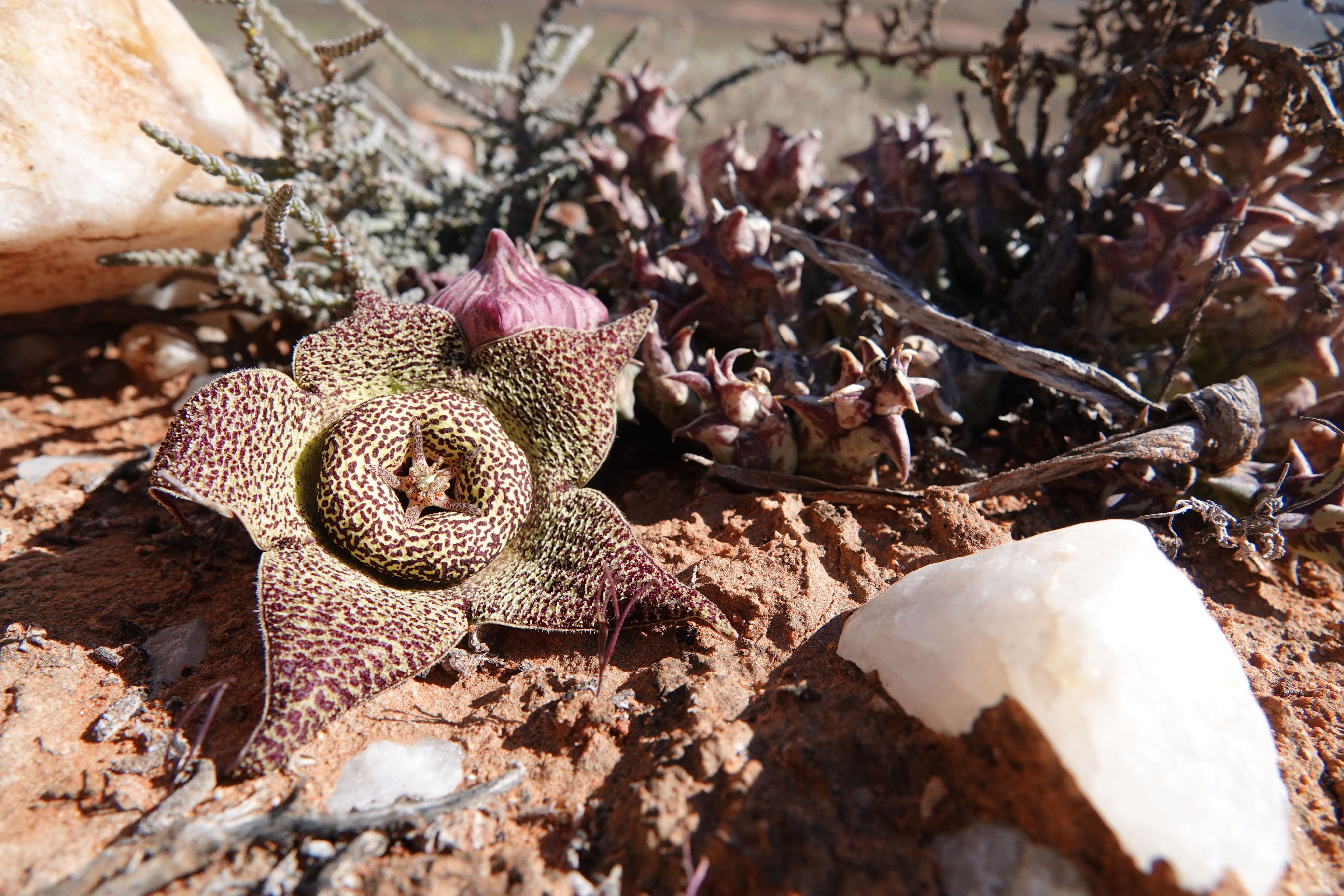
Photo: Alexander M. Bürger
Study area:
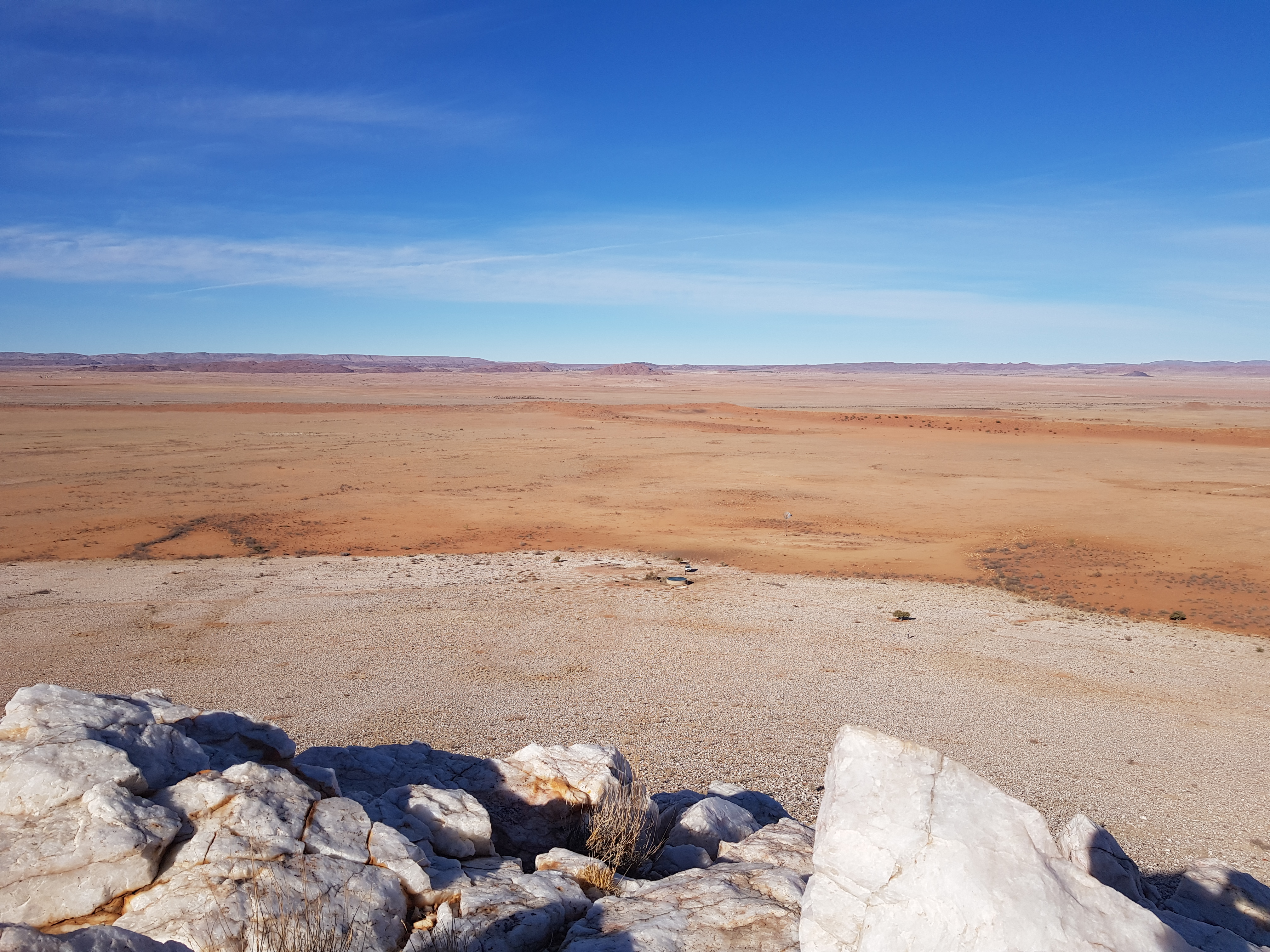
Quartz islands are characterised by a dense cover of angular quartz gravel at the soil surface
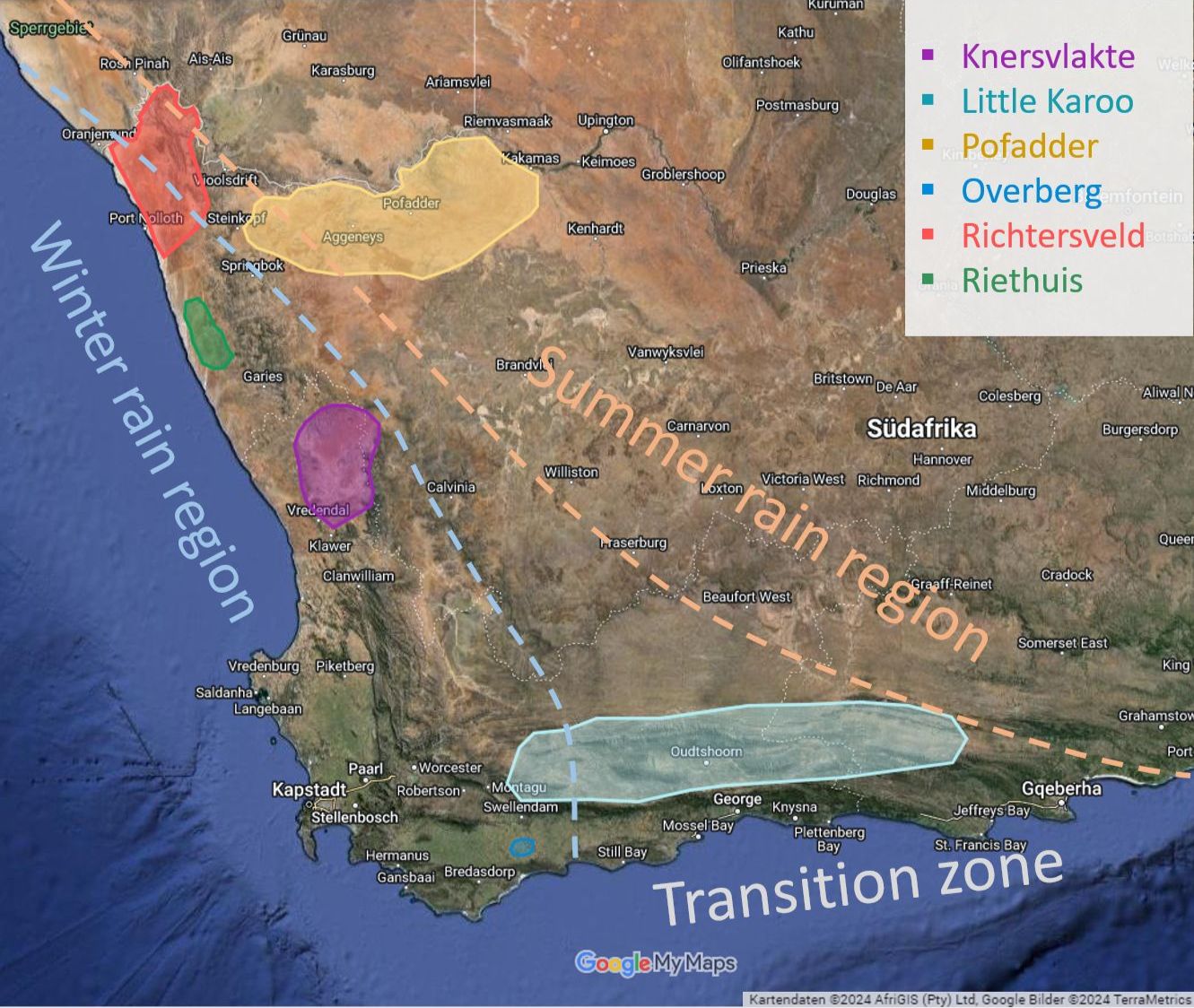
that originates from the weathering of quartz veins. Due to shallow soils, high salinity and stone content, quartz islands are edaphically arid habitats with special microclimatic conditions. The islands show clear boundaries to the surrounding environment (matrix). Our study consists of six different quartz archipelagos, which location in South Africa range from the Succulent Karoo, a semi-arid winter-rainfall biome situated in southwest southern Africa (Little Karoo, Knersvlakte, Richtersveld and Riethuis) over the Fynbos biome that receives high winter rainfall (Overberg at the southern tip of Africa) to the Nama-Karoo biome in the semi-arid summer rainfall region (Pofadder).
Quartz islands flora:
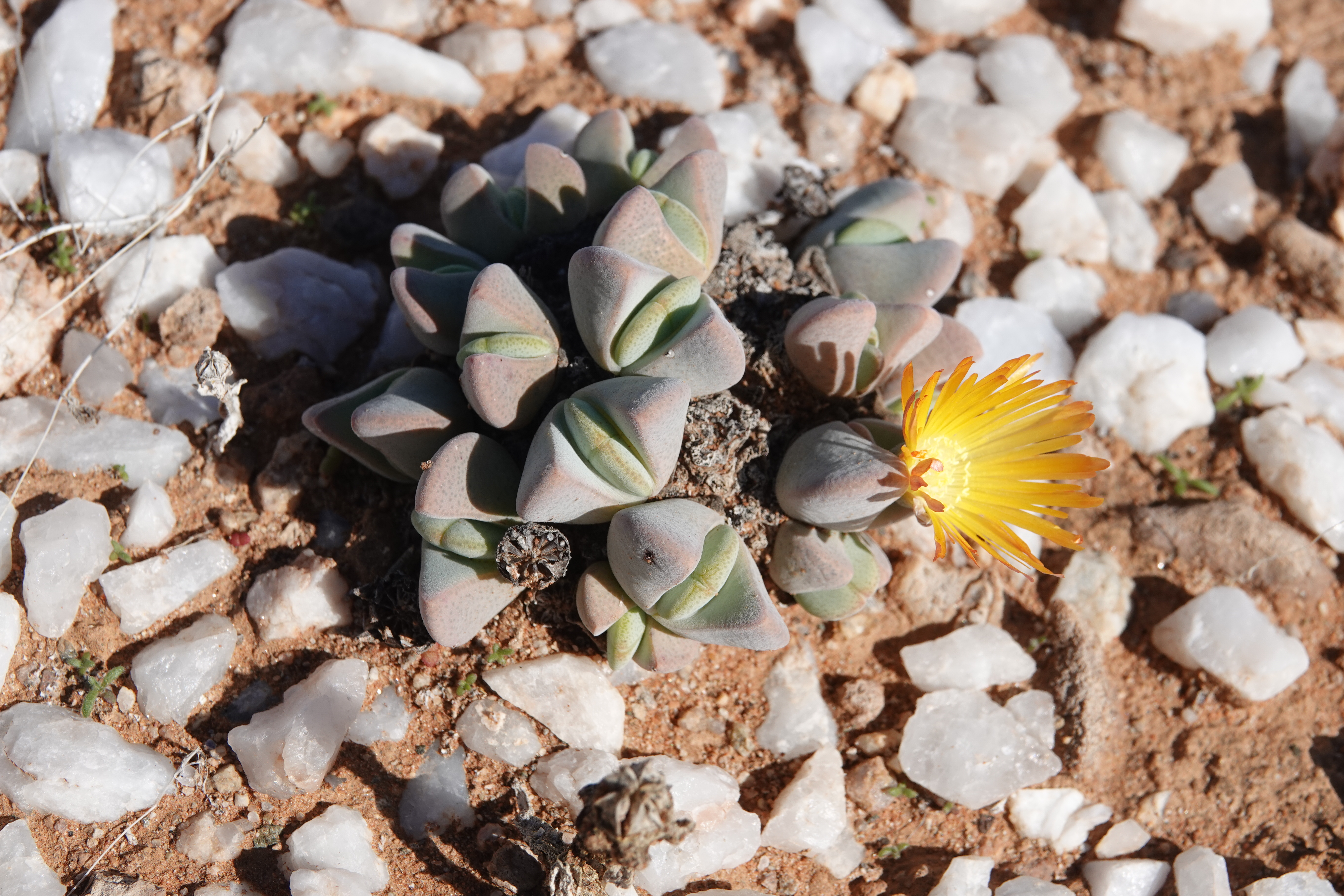
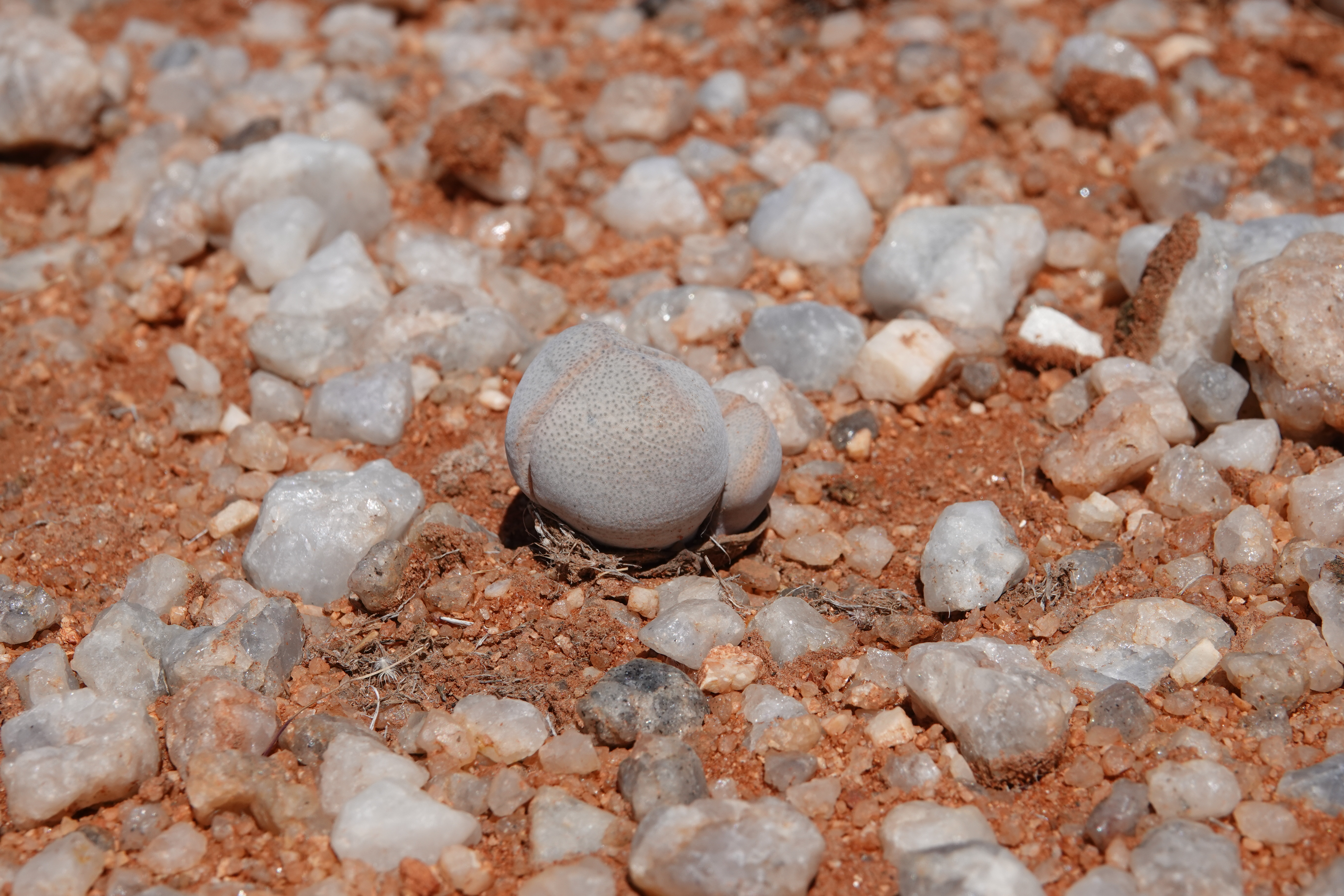
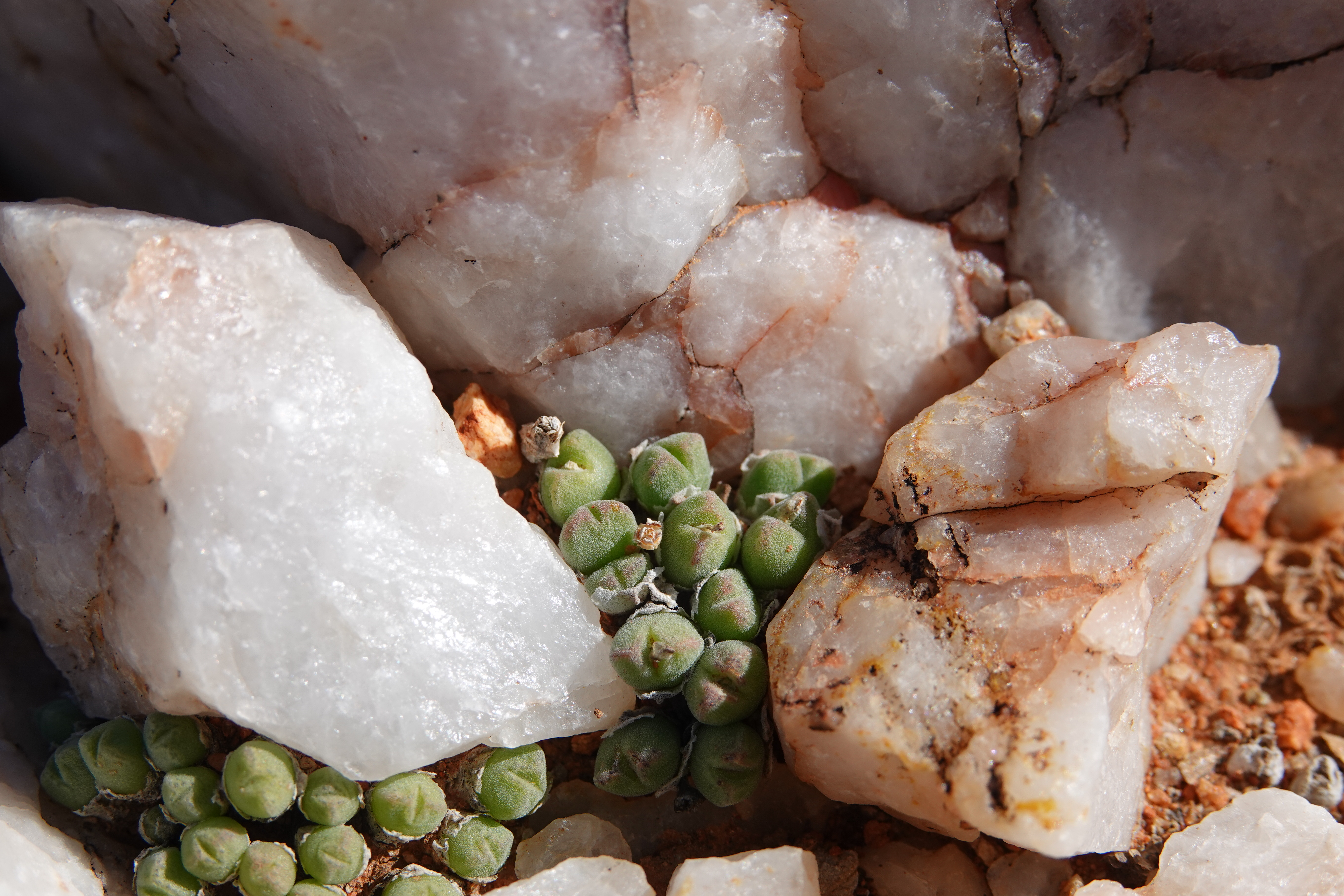
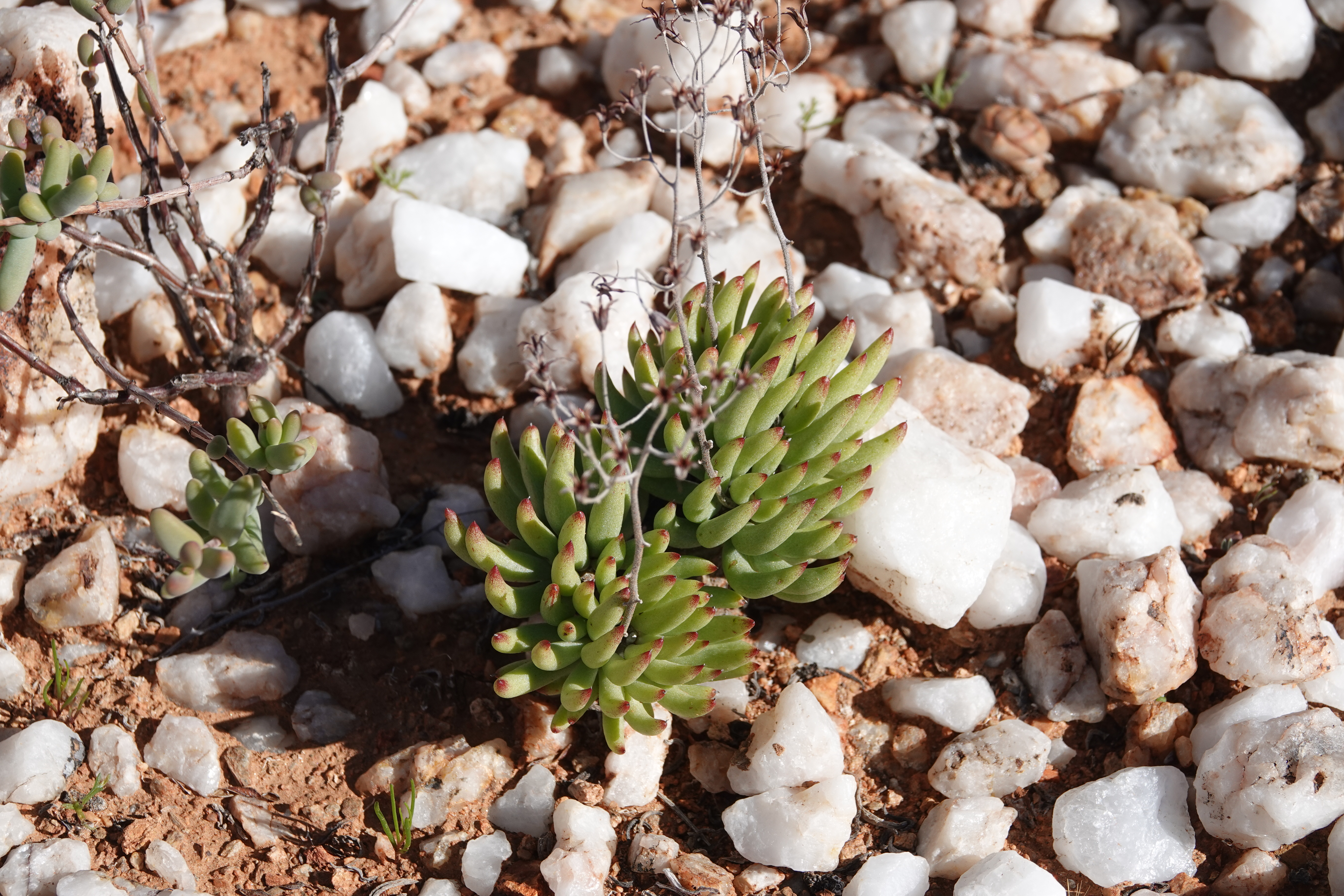
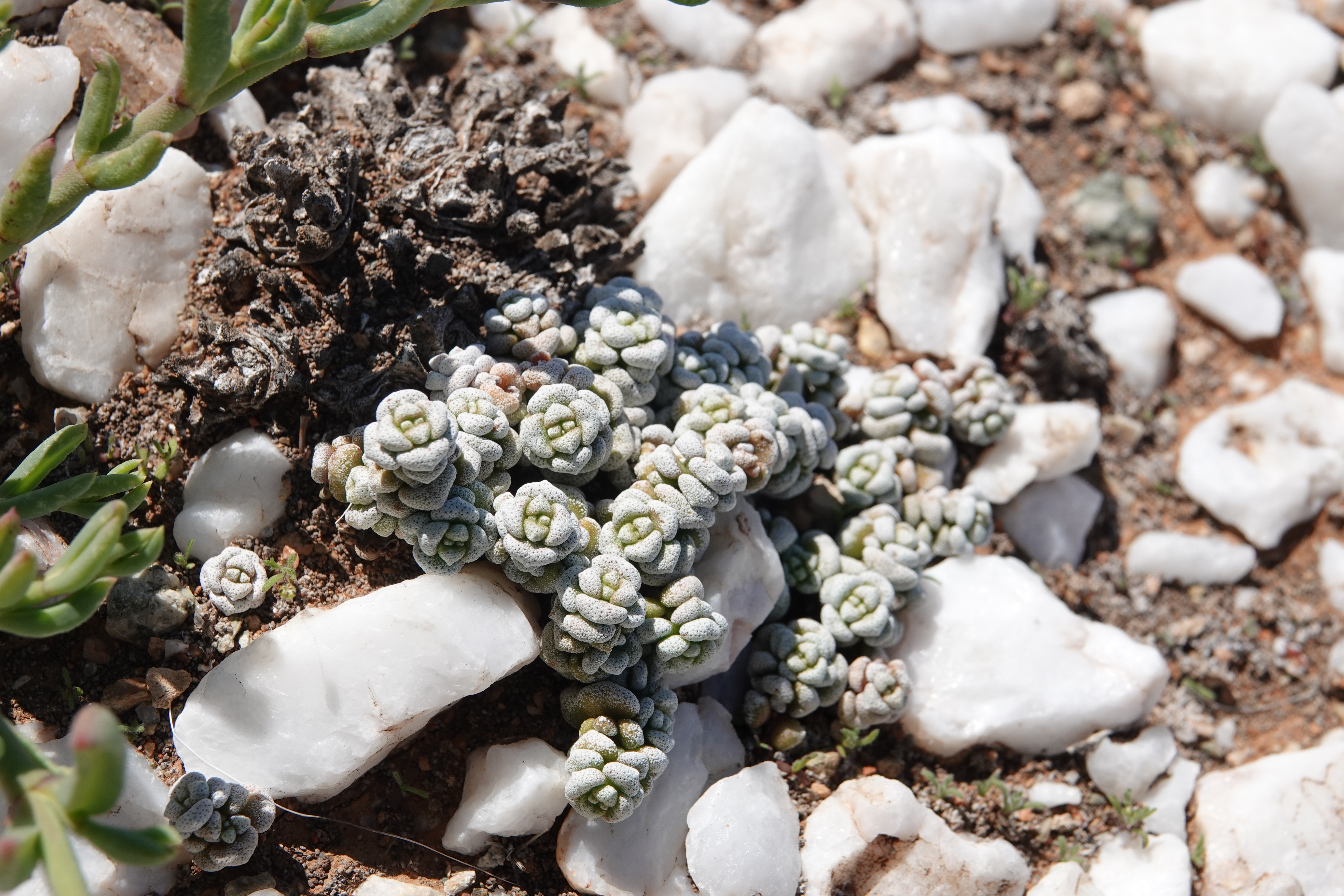
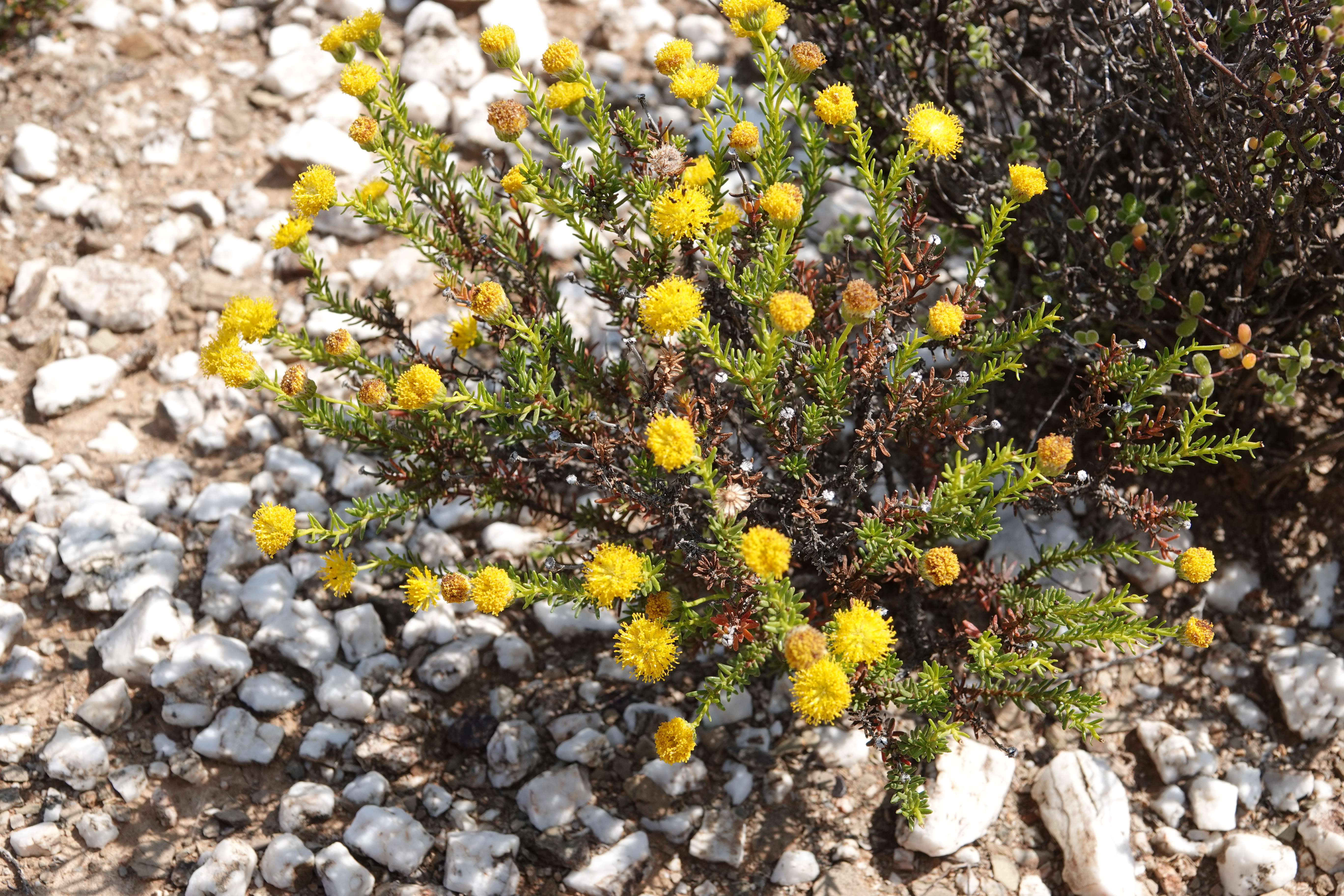
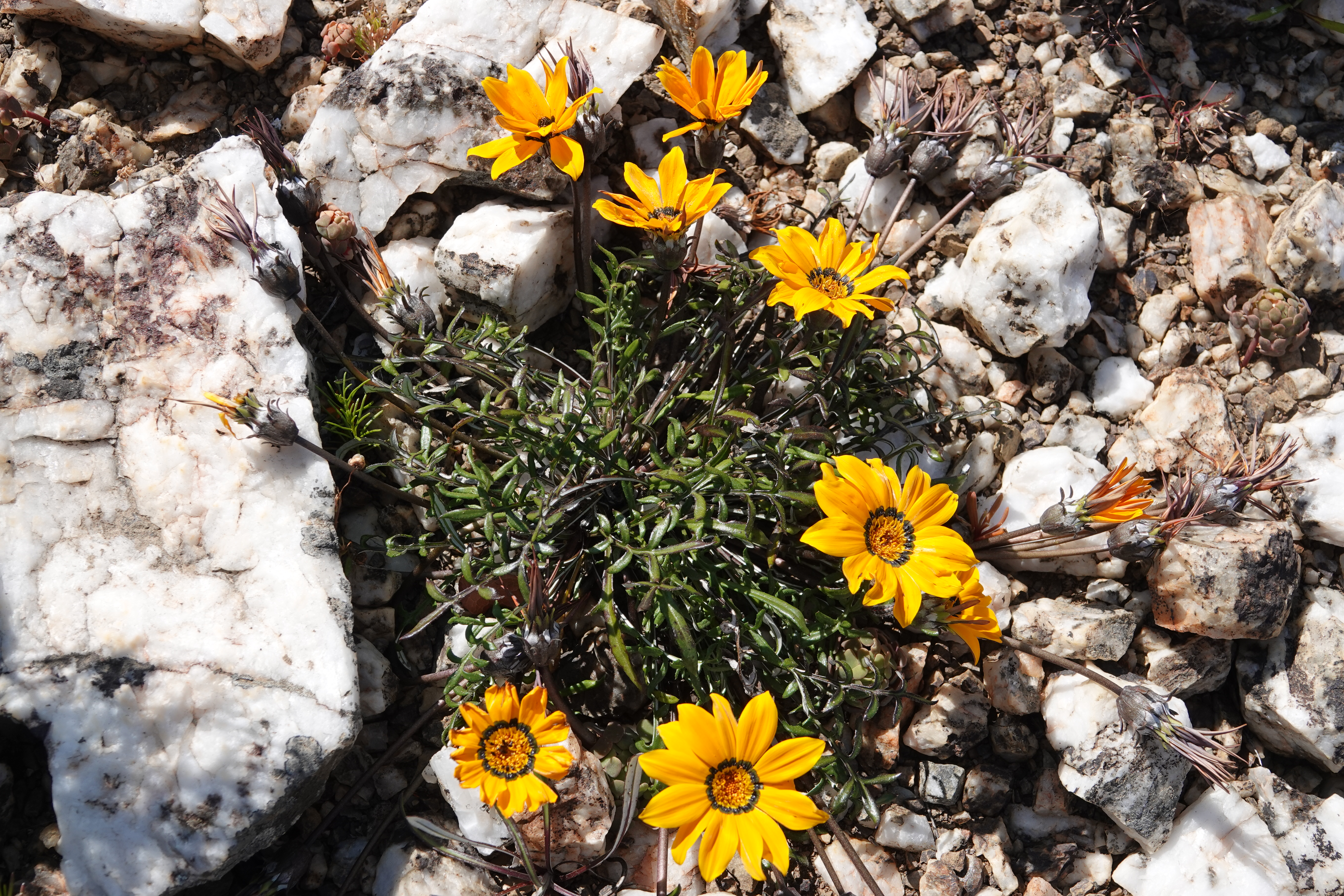
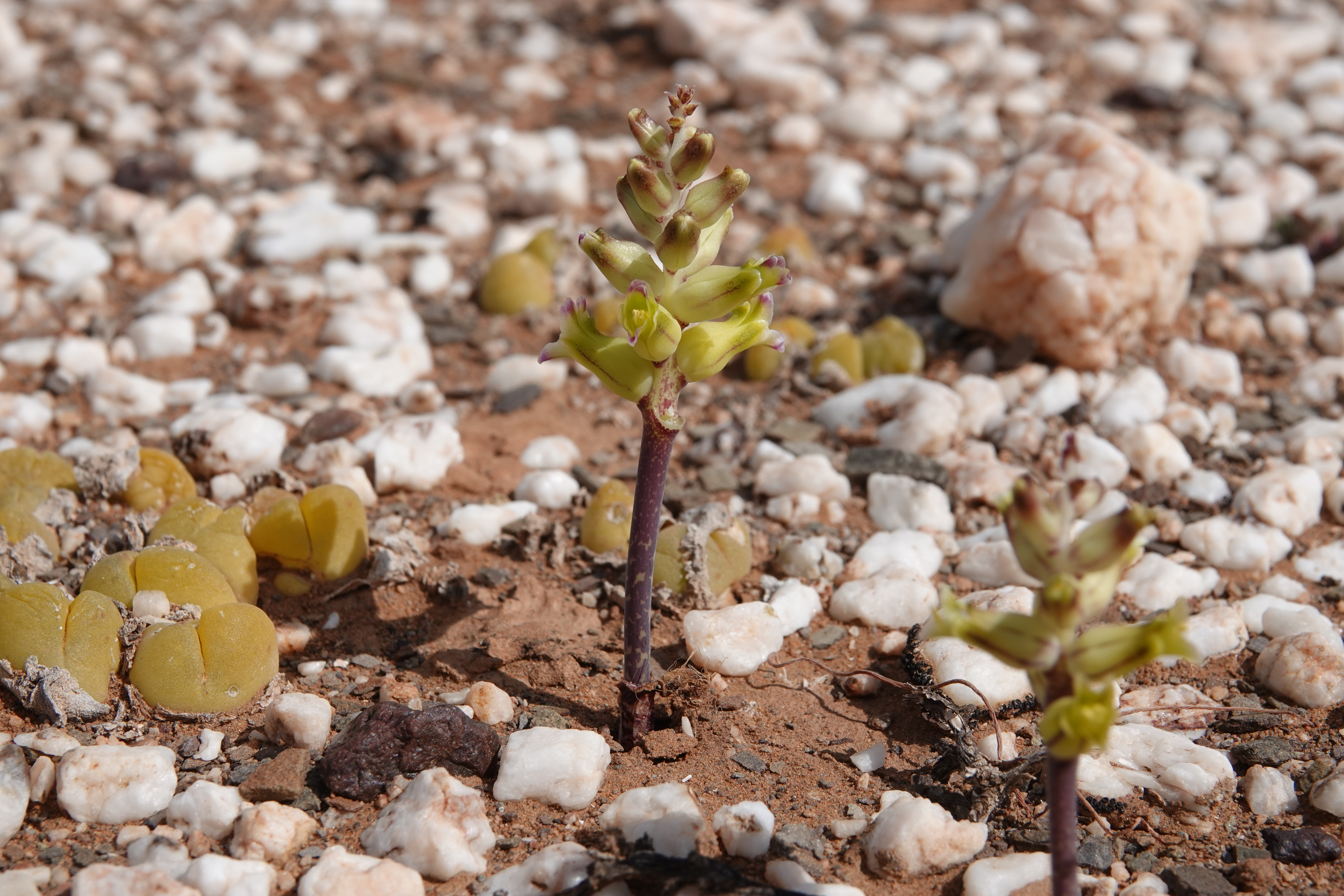
Irrespective of the biomes they occur in, the vegetation of quartz islands has a remarkable structural similarity and is characterised by features of the Succulent Karoo biome (i.e., dominance of dwarf leaf succulents). The similar growth-form types of the quartz island vegetation in the Knersvlakte and the Little Karoo, have been interpreted earlier as the result of convergent evolution in adaptations to the abiotic environmental conditions. However, the environmental drivers of species and trait composition on quartz islands beyond these two archipelagos have not been studied yet. So far the Aizoaceae, Asteraceae and Crassulaceae plant families were the most abundant ones on quartz islands. Selected examples for plant species found on quartz islands are shown in following slideshow: